The Complete Guide To Drawer Slides: Types, Mechanisms, Installation, And Maintenance
Understanding Drawer Slides: Types and Mechanisms
Drawer slides are essential hardware components that allow drawers to open and close smoothly. There are three primary types of drawer slides:
- Side-mount slides: These attach to the sides of the drawer and typically support loads between 75 to 100 lbs. They are versatile and can offer either full or partial extension based on the model.
- Center-mount slides: Fixed underneath the drawer’s center using a single slide, these often use roller or ball-bearing mechanisms. They support lighter loads, around 50 lbs, and are commonly found in lightweight furniture.
- Under-mount slides (Euro slides): Attached beneath the drawer and hidden from view, these provide higher load capacities (up to 100 lbs or more). They employ smooth ball-bearing mechanisms and often include soft-close features for quiet, gentle closing.
Mechanisms vary in smoothness and durability. Roller slides use wheels on tracks, which offer basic functionality and cost efficiency. Ball-bearing slides utilize precision bearings, enhancing smoothness and allowing them to handle heavier loads. Additional mechanisms include soft-close—using dampers to prevent slamming, ideal for kitchen and office drawers—and push-to-open springs that enable handle-less drawers to open with a simple push, enhancing modern aesthetics.
Extension lengths vary from 3/4 to full extension, with under-mount and ball-bearing slides typically offering full extension for maximum drawer access. Side-mount slides are ideal for heavy-duty or utility drawers, center-mount for lighter uses, and under-mount slides are favored in high-end cabinetry due to concealed design and quiet operation. Source: Häfele | Source: Rockler
Choosing the Right Drawer Slides for Your Cabinet
Selecting the appropriate drawer slides involves several important considerations to ensure smooth functionality and durability:
- Measurements: Accurately measure both the drawer and cabinet dimensions, as the slides must fit properly within the allocated space.
- Weight capacity: Heavier contents such as tools require robust full-extension ball-bearing slides, while lighter loads can use simpler, more economical options.
- Extension length: Decide between partial extension for limited access or full extension for complete drawer accessibility.
- Drawer overlay style: Choose between overlay, partial overlay, or inset reveal to match your cabinet design.
- Mounting style: Side-mounted slides are common and strong, under-mount slides deliver a cleaner look and quieter operation, and center-mount slides suit shallow drawers.
- Finish options: Zinc plating offers rust resistance, while black epoxy provides an aesthetic match for certain cabinetry.
- Budget and materials: Balance quality and cost; heavy-duty metal drawers need sturdier slides, while lightweight plywood or laminate drawers suit lighter models.
For kitchens, smooth and quiet full-extension under-mount slides are usually preferred. Bedroom drawers often utilize side-mounted or under-mount slides for moderate loads, whereas heavy tools require robust ball-bearing side-mount slides that offer a high weight rating. This tailored approach ensures optimal functionality and drawer longevity. Source: Family Handyman
How to Install Drawer Slides: Step-by-Step Guide
Installing drawer slides correctly is key to ensuring smooth operation. Follow these steps:
- Measure the drawer depth to select the correct slide length—usually the drawer’s full depth or slightly shorter.
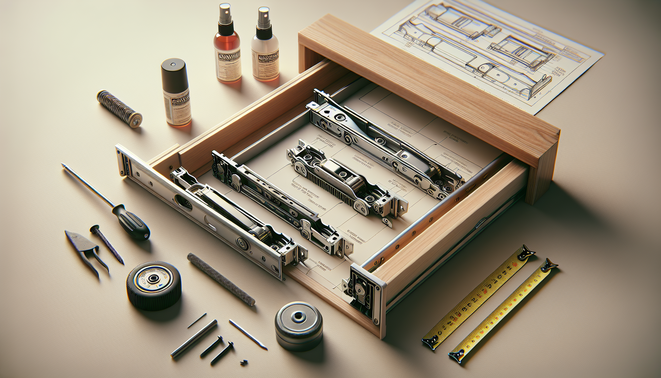
- Gather tools including measuring tape, pencil, screwdriver or drill, level, and clamps.
- Mark reference lines inside the cabinet at the height where slides will be mounted.
- Attach the cabinet members of the slides along these lines using screws, ensuring they are level to facilitate smooth movement.
- Fix the drawer members to each side of the drawer, aligning carefully at the same height and securing with screws.
- Slide the drawer into the cabinet members and test the motion. If binding or misalignment occurs, adjust screws or reposition the slides until smooth operation is achieved.
Note variations: side-mount slides affix to the drawer sides, while under-mount slides secure beneath, often requiring precise alignment via included templates. Under-mount slides also benefit from adjustment screws to fine-tune drawer alignment.
Consult manufacturer guides for visuals and template aids tailored to your specific slide model for faster and more accurate installation. Source: Family Handyman
Maintenance Tips to Ensure Long-Lasting Drawer Slide Performance
Routine maintenance prolongs the life and performance of drawer slides. Key tips include:
- Regularly clean debris using a soft brush or cloth to prevent buildup that restricts smooth movement.
- Periodically check and tighten fasteners to maintain alignment and prevent drawer wobble.
- Lubricate metal ball-bearing slides with silicone-based or lithium grease lubricants for optimal performance—avoid oil-based lubricants that attract dust.
- Avoid overloading drawers beyond the manufacturer’s weight limit to reduce stress and prevent premature wear.
- Conduct seasonal inspections as metal components may contract in colder months, requiring lubrication refresh.
- For drawers under heavy use, increase frequency of checks and lubrication to extend lifespan.
- At signs of persistent sticking, squeaking, or misalignment, inspect parts to determine whether repairs or full replacements are needed—bent or broken rails usually require replacement.
Proper care and timely maintenance prevent costly replacements and sustain smooth drawer operation in daily use. Source: Family Handyman | Source: Popular Mechanics
Troubleshooting Common Drawer Slide Issues and Solutions
Common drawer slide problems can be resolved with a systematic approach:
- Sticking slides: Clean debris and lubricate metal slides with silicone spray or dry lubricant. Avoid oil-based products that attract dust. Source: Family Handyman
- Sagging drawers: Check for loose screws or damaged slides. Tighten screws or replace bent slides. For heavy drawers, consider upgrading to heavy-duty slides. Source: Wood Magazine
- Misalignment: Loosen mounting screws, realign slides flush with the drawer and cabinet, then retighten. Use a level to ensure proper alignment. Source: This Old House
- Noisy slides: Clean slides and apply silicone lubricant. Replace worn nylon or ball bearings if noise persists. Source: Home Depot
- Broken soft-close mechanisms: Usually require full slide replacement, though some brands offer specific replacement parts. Source: Rockler
- Uneven drawer gaps: Adjust side or bottom mounting screws or use shims to balance gaps.
If simple fixes fail or slides are extensively damaged, seek professional repair or replacement services to ensure smooth, long-lasting drawer functionality.
Sources
- Family Handyman – How to Choose the Right Drawer Slides
- Family Handyman – How to Fix Drawer Slides
- Family Handyman – How to Fix Sticky Drawers
- Family Handyman – How to Install Drawer Slides
- Häfele – Drawer Slides
- Home Depot – How to Fix Drawer Slides
- Popular Mechanics – Drawer Slide Maintenance & Repair
- Rockler – Guide to Drawer Slide Types
- Rockler – How to Fix Soft Close Drawer Slides
- This Old House – How to Install Drawer Slides
- Wood Magazine – How to Fix Drawer Slides